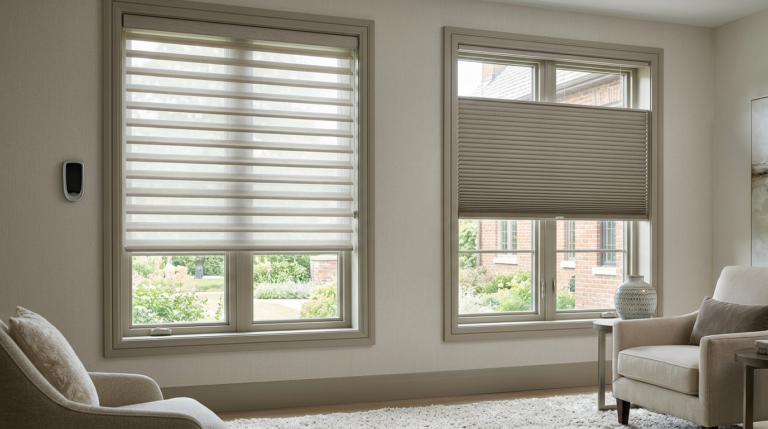
Deciding when to repair or replace window coverings comes down to evaluating whether mechanical issues like frayed lift cords can be serviced or if permanent fabric degradation and compromised insulation justify an upgrade. While restringing and hardware fixes easily breathe new life into intact treatments, upgrading to high-performance cellular shades delivers superior thermal efficiency and long-term value against harsh seasonal temperature swings. The design team at Custom Shades of London helps homeowners assess structural wear to ensure every window receives the most cost-effective and beautiful solution.
Overview
Deciding when to repair or replace window coverings requires evaluating mechanical wear against permanent material failure. This analysis includes a labeled real-world hypothetical that illustrates how a homeowner evaluates restoration versus complete replacement under practical constraints.
Review the specific mechanical, environmental, and financial factors below to determine the best path forward for existing treatments.
- Hardware Diagnostics: Identify mechanical issues such as frayed strings or jammed tilters using direct repair signs.
- Material Degradation: Recognize severe structural breakdowns such as discoloration and fabric dry rot.
- Moisture Impacts: Evaluate how continuous seasonal condensation and humidity swings warp operating mechanisms.
- Insulation Performance: Weigh ongoing temperature drafts against the measurable thermal efficiency gains of modern honeycomb shades.
- Real-World Example: Walk through a classic home project to restring classic shades rather than ordering replacements.
- Cost Assessment: Compare short-term shop labor bills directly with long-term replacement value over time.
London homeowners face seasonal temperature swings from winter lows of -10°C to summer humidity levels over 80 percent, exposing window treatments to severe thermal stress and intense UV radiation. Determining when to repair or replace window coverings depends on distinguishing between isolated mechanical faults and systemic textile decay. Lift cord breaks, loose chain loops, and jammed tension pulleys are straightforward hardware fixes that restore smooth daily operation without discarding functional blinds or shades.
Full replacement becomes necessary when structural fabric breakdown takes hold. Severe dry rot, shredding cell walls on cellular shades, cracked internal slats, or discontinued headrail assemblies cannot hold tension safely or insulate against glass drafts. Assessing your window treatments room by room separates quick cord maintenance from long-term upgrades that improve interior comfort and energy efficiency.
Assessing Structural Fabric Damage and Solar Breakdown
Evaluating aging window installations starts with inspecting how the textile itself handles daily tension. Installing Designer Solar® shades on south- or west-facing glass shields living spaces from harsh daylight, but years of unfiltered exposure eventually degrade standard fabrics. Solar radiation breaks down polymer bonds in woven synthetics and natural cottons alike, leading to noticeable brittleness across the lower hem.
Minor cosmetic issues do not automatically demand an entire purchase. When we examine treatments across Old South properties, surface pilling or isolated thread separations along bottom edges can usually be re-stitched or stabilized. In contrast, deep material decay requires complete updates:
- Severe dry rot: Fabric that tears under light finger pressure or sheds microfibers during gentle dusting has lost its tensile strength.
- Backing layer delamination: Thermal and blackout coatings that powder, crack, or peel away from the primary weave cannot be re-bonded.
- Persistent warp lines: Uneven thermal cycling stretches fabric edges permanently, causing edges to curl inward and jam inside window frames.
For extensive glazing or sunrooms, upgrading to modern large windows treatments restores crisp light control while preventing the frustration of repeatedly patching decayed cloths. As noted by Natural Resources Canada (nrcan.gc.ca), quality window coverings help reduce heat loss during winter and lower heat gain in summer, improving overall household energy efficiency. When the structural foundation of the textile disintegrates, replacing the unit delivers reliable operation and superior thermal defense.
Assessing Fabric Degradation and Sunlight Exposure Across Living Spaces
Selecting durable Designer Solar® roller shades protects interior textiles from the relentless daylight that filters through south- and west-facing glass. Across neighbourhoods like Old South and near the Thames River, mature tree canopies shift light exposure throughout the seasons, but unshaded glass exposes decorative fabrics to constant ultraviolet radiation. Over time, sunlight oxidizes natural and synthetic fibres, altering how yarns flex under mechanical movement. When inspecting aging window coverings, examining whether the issue sits on the surface or runs through the structural weave determines whether targeted service or a complete installation is appropriate.
Surface Imperfections Versus Structural Breakdown
Minor cosmetic wear does not necessarily mean a shade has reached the end of its functional life. In many cases, isolated flaws can be re-stitched or stabilized:
- Frayed edge threads: Cleanly trimming and sealing loose perimeter stitches prevents unraveling along bottom hems.
- Surface piling: Light fiber fuzz caused by rubbing against window frames can be groomed without compromising base strength.
- Mild color shift: Even solar fading across the exterior face can often be tolerated if the interior weave remains dense and supportive.
Our specialists inspect the backings of aging treatments during home consultations. When natural humidity shifts interact with repeated solar baking, backing materials lose elasticity. Brittle linings that crack into powder, visible tears across the main panel, or fabric dry rot that tears when pinched demonstrate that the textile base has failed. Once yarns lose tensile stability, shades can no longer hold balanced tension on a roller tube or withstand regular dust cleaning.
Upgrading to modern Pirouette® sheer shades replaces sun-rotted textiles with high-performance fabrics designed to control glare without disintegrating. Installing resilient materials over large windows ensures long-term UV resistance while helping balance indoor comfort through seasonal temperature shifts.
Seasonal Weather Shifts and Fabric Degradation Benchmarks
According to Environment Canada climate normals (climate.weather.gc.ca), London, Ontario records notable monthly relative humidity variations across the calendar year, moving between damp summer conditions and freezing winter dry spells. These intense climate fluctuations cause natural textiles and lift components to swell, contract, and age prematurely. When deciding Hunter Douglas sheer shades® or draperies warrant service rather than disposal, we check three primary material indicators across each room.
1. Fabric Degradation and Sunlight Exposure
Custom window coverings positioned on west-facing or south-facing exposures face steady ultraviolet exposure throughout peak afternoon hours. Sunlight breaks down organic threading, resulting in visible discoloration, brittle edges, or micro-tears along bottom hems.
- Serviceable conditions: Minor fraying along an edge hem, loosened guide stitching, or faint surface patina on modern synthetics can typically be re-sewn or reinforced.
- Replacement conditions: When material suffers dry rot, crumbles under slight thumb pressure, or exhibits chalky backing failure, re-lining is no longer structurally sound.
Our specialists check whether the woven structure still supports mechanical tension. If the primary weave separates when raised, ordering replacement shades ensures lasting durability and restores proper solar control.
2. Operating Mechanisms and Internal Lift Hardware
Carefully evaluating hardware functionality before scheduling work prevents recurring expenses. You can review our blind removal tips to safely inspect headrail assemblies for worn parts.
| Physical Indicator | Repair Recommendation | Replacement Recommendation |
|---|---|---|
| Textile Body | Surface fading or loose hem stitch | Brittle fiber disintegration or flaking blackout backing |
| Internal Cords | Single snapped strand with intact gears | Repeated internal cord shredding across obsolete rails |
| Operating Control | Slipped tilt gear or stuck spring tensioner | Cracked internal housing or discontinued drive units |
Evaluating Fabric Decay and Cord Damage Across Seasonal Shifts
Natural climate fluctuations throughout southwestern Ontario subject household textiles to steady mechanical and thermal stress. Data from Environment Canada climate normals confirms substantial month-to-month swings in regional atmospheric moisture, which causes soft goods around glass panes to repeatedly expand and contract. When evaluating whether to service or swap out aging installations, structural degradation of the material serves as the first benchmark.
Hunter Douglas shades exposed to constant southern or western light frequently suffer photo-oxidation, turning synthetic yarns brittle over several seasons. While minor seam unraveling or localized surface fuzz can be reinforced, advanced dry rot destroys the core weave. Once light leaks through shredded backing layers or materials crumble under light vacuuming, restitching fails to restore operating tension, making whole-unit substitution the sensible choice.
Mechanical performance forms the second checkpoint when deciding how to proceed. Installing Duette® Cellular treatments delivers substantial thermal resistance, backed by Natural Resources Canada findings that proper window installations lower winter draft losses and mitigate summer heat entry. However, prolonged operation on large spans eventually wears internal drive components:
- Isolated Lift Cord Abrasion: Individual cord fraying on otherwise sound pleats justifies targeted restringing without discarding the shade profile.
- Internal Barrel Slippage: When headrail mechanisms seize or cords saw directly into plastic guide channels, component fatigue often exceeds the value of patchwork servicing.
- Uneven Stacking and Warping: Celled fabrics distorted by unchecked interior condensation lose both aesthetic alignment and their engineered insulating boundary.
Investing in Sonnette® cellular roller systems resolves persistent hardware friction by enclosing moving components while maintaining insulation across draft-prone rooms. Comparing the expense of bench labor against modern mechanical reliability clarifies the exact moment full replacement protects home comfort better than repeated service calls.
Assessing Fabric Degradation and Mechanical Wear Across London Homes
According to Environment Canada climate normals, regional weather patterns bring substantial monthly humidity variation alongside sub-zero winter temperatures and heavy snowfall. These shifts subject interior window treatments to constant physical strain. Determining when to repair or replace window coverings begins with a systematic inspection of structural integrity, moving from textile condition down to internal hardware.
1. Fabric Breakdown and Solar Oxidation
Direct sun exposure through south- and west-facing glass degrades natural and synthetic weaves over time. Homeowners often notice surface fuzzing or isolated stitching separations along hems, which our specialists can easily reinforce during routine maintenance. In contrast, deep ultraviolet breakdown causes dry rot that weakens the core weave. When cloth frays upon contact or the room-darkening backer flakes away, the shade cannot sustain operational tension. At this stage, replacing the unit with resilient Vignette® Modern Roman Shades provides greater structural longevity and restores interior light control.
2. Mechanical Operation and Cord Tension
Internal mechanisms experience repetitive mechanical drag, especially on wide windows found throughout older properties. Choosing professional blind repairs makes practical sense when the fabric remains intact and the malfunction stems solely from snapped lift cords or a slipped spring roller. However, if the internal headrail components have stripped or the shade operates with persistent skewing, full replacement is the safer path. Upgrading worn treatments to modern Hunter Douglas sheer shades eliminates exposed cord friction entirely while maintaining balanced day-to-day operation.
Three Physical Tests to Determine Shade Restoration or Renewal
Environment Canada data for London, Ontario confirms that relative humidity shifts month to month throughout the year, cycling between sub-zero winter chills and humid summer heat. These continuous atmospheric swings contract and expand materials, putting steady stress on fabric weaves, internal cords, and mounting brackets. When evaluating whether to refurbish or purchase new treatments, inspecting the physical condition of the textiles and internal mechanisms clarifies the most cost-effective path forward.
1. Fabric Breakdown and Solar Degradation
Custom window coverings facing unobstructed south or west exposures absorb relentless ultraviolet radiation, particularly in mature neighbourhoods like Old South where afternoon sun penetrates through thinning tree canopies. Over extended periods, photo-oxidation weakens synthetic and natural fibers alike.
Minor surface issues such as frayed edge stitching or slight cosmetic fading can often be trimmed or re-hemmed. In contrast, dry rot, brittle backing layers that shed white dust, or tears in the weave indicate total structural failure. Once textile fibers lose their tensile strength, they can no longer hold tension or withstand normal cleaning, making full replacement the only dependable choice.
2. Mechanical Function and Cord Wear
Targeted blind repairs make financial sense when high-grade textiles remain in excellent condition but an internal component snaps. If a lift cord frays on a custom Roman shade, restringing the line or replacing a broken clutch restores full functionality without discarding the original decor fabric.
Hunter Douglas sheer shades, for instance, rely on precision internal hardware to tilt translucent fabric vanes. If the delicate sheer facings tear or stretch unevenly from age, mechanical repairs alone will not correct the droop, signaling that a modern replacement provides superior long-term performance.
FAQ
Deciding when to repair or replace window coverings often depends on the extent of wear, upgrade opportunities, and overall project costs. The table below addresses common questions to help you determine the best path forward for your window treatments.
| Question | Answer |
|---|---|
| Which fabric damage signs indicate it is time to buy new shades? | Extensive fading, fraying hems, brittle textiles, and moisture mold require total product renewal. If UV exposure breaks down the internal weave, patching the fabric will fail to restore structural integrity or privacy. Upgrading to durable solar or cellular textiles delivers proper insulation against shifting London, Ontario seasons. |
| How do repair costs compare to full replacement for modernizing window treatments? | Minor mechanical jobs like replacing cord loops, tilt gears, or mounting brackets usually cost a fraction of new hardware. If service estimates exceed half the price of modern replacements, investing in updated shades provides better long-term value. Homeowners across London, Ontario also gain improved thermal efficiency that lowers household heating and cooling bills. |
| Can manual shades be converted to motorized operation during a mechanical overhaul? | Certain heavy-duty roller tubes can accept an aftermarket tubular motor if the original textiles and brackets are undamaged. If older assemblies use proprietary internal springs or discontinued profiles, retrofitting becomes impractical. Choosing complete motorized replacements ensures compliant cordless child safety and provides comprehensive manufacturer warranty coverage. |
| Should older blinds in historic London properties be repaired or swapped out? | Wood blinds and tailored Roman treatments that match original heritage trim are excellent candidates for restringing and realignment. When decades of humidity and sunlight cause slats to cup or cords to repeatedly snap, replacement becomes the practical path. Custom-measured replacements preserve original architectural depths while preventing drafts common in classic Southwestern Ontario architecture. |