Answer
Evaluating hunter douglas vs alta shades comes down to whether your space calls for flagship, patented textile engineering or streamlined, budget-conscious durability. Exploring premium Hunter Douglas shades unlocks exclusive light-diffusing designs and advanced smart motorization, whereas Alta delivers exceptional day-to-day functionality and cost savings across larger multi-room projects. The design consultants at Custom Shades of London can walk you through both portfolios to determine the exact blend of performance, insulation, and architectural elegance your home requires.
Overview
Selecting window treatments involves balancing material performance, operational systems, and total project investment. Evaluating hunter douglas vs alta shades requires examining how proprietary textiles and automated platforms function across different architectural layouts.
This guide reviews the manufacturing background, operational motorization choices, and budget distributions between both collections. A labeled real-world hypothetical illustrates an installation in Wortley Village before reviewing climate-specific performance factors for Southwestern Ontario residences.
- Corporate Ownership: Review the shared corporate relationship between parent company and subsidiary brand lines.
- Textile Capabilities: Compare light-filtering weaves and proprietary textiles designed for custom shading.
- Operating Systems: Assess automated scheduling and motorization systems built for everyday smart-home control.
- Project Costs: Examine tiered pricing models and budget considerations for whole-home window coverings.
- Real-World Example: Walk through a heritage home window covering selection balancing energy efficiency and style.
- Regional Climate: Identify durable materials built for Southwestern Ontario climates across seasonal temperature shifts.
Natural Resources Canada reports that interior window coverings substantially decrease winter heat loss and summer thermal gain, a critical factor for homeowners balancing January lows of -6°C against humid July afternoons in Southwestern Ontario. Comparing Hunter Douglas vs Alta shades pairs two sister brands under the same parent corporate umbrella, contrasting high-end architectural treatments with practical, budget-conscious alternatives. Historic properties in London neighborhoods like Wortley Village and Old North often require narrow jamb mountings for traditional double-hung frames, while open-concept builds across Exeter demand wide solar control for expansive picture glass.
Evaluating Hunter Douglas® alongside Alta Window Fashions™ centers on balancing proprietary fabric weaves, automated control systems, and whole-home investment thresholds. Hunter Douglas® leads with patented luxury innovations such as Silhouette® Window Shadings, Pirouette® Window Shadings, and PowerView® Automation Gen 3. In contrast, Alta Window Fashions™ delivers streamlined cellular, roller, and sheer shade designs powered by BLISS™ Automation, giving local households dependable performance at an accessible price point.
Brand Hierarchy and Corporate Connection Between Both Lines
When homeowners compare premium window treatments in Southwestern Ontario, a frequent question centers on whether Alta Window Fashions™ operates independently or alongside Hunter Douglas®. The official relationship is straightforward: Alta Window Fashions™ is a Hunter Douglas® company. Rather than competing as detached corporate entities, both lines share parent manufacturing resources while addressing distinctly different project scopes, budget tiers, and architectural priorities across our region.
Hunter Douglas® stands as the global manufacturing leader for custom window coverings, investing heavily in proprietary textiles and advanced control mechanisms, such as those secured under patent US8342225B2. The premium brand focuses on architectural refinement, showcased in luxury offerings like Alustra® Architectural roller shades that serve complex interior plans. In contrast, Hunter Douglas positions Alta Window Fashions™ as its value-priced brand family. Alta delivers custom blinds, shades, shutters, and drapery configured for practical durability and everyday glare control without the top-tier luxury surcharge.
Regional building styles in London and Huron County demand careful matching of window treatments to seasonal exposures. Heritage homes throughout Old North and Wortley Village often retain vintage woodwork and draft-prone frames that benefit from insulating air pockets found in custom cellular window coverings. Meanwhile, agricultural builds across Exeter and South Huron, as well as newer open-concept builds along London’s perimeter, frequently sport wide picture windows that receive punishing afternoon sun. For these expansive exposures, installing Hunter Douglas sheer shades allows soft daylight diffusion while preserving outdoor visibility.
Natural Resources Canada reports that interior coverings reduce winter heat loss and summer heat gain when properly specified and mounted to the correct depth. At Custom Shades of London, we help local homeowners weigh these structural factors alongside budget boundaries. Hunter Douglas provides comprehensive proprietary styling and synchronized whole-home logic through PowerView® Automation, while Alta Window Fashions™ supplies budget-conscious shade automation and reliable light control for targeted installations.
Architectural Matchups and Corporate Ties Behind Both Brands
Deciding between Hunter Douglas shades and Alta Window Fashions™ requires evaluating how your home handles regional light and shifting seasons. Properties across Southwestern Ontario present contrasting structural demands. In London, historic brick residences throughout Old North and Wortley Village showcase deep casing trims around tall double-hung frames, while recent developments feature wide expanses of picture glass. Further north in Huron County, farming residences in Exeter face open wind corridors and intense thermal swings. Natural Resources Canada notes that interior window coverings help decrease winter heat escape and cut summer solar gain, provided the mount depth, product profile, and operation match the opening.
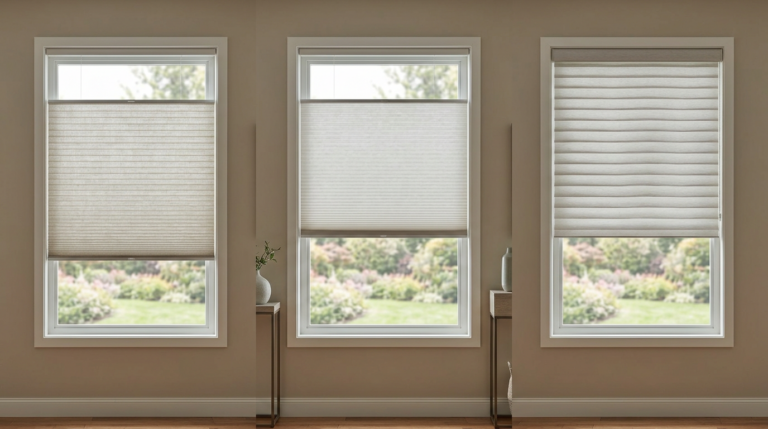
Cellular shades solve persistent draft problems in exposed dining rooms and west-facing sunrooms by creating structured barrier pockets across the glass. In open main-floor layouts where harsh dawn glare washes out screens, sheer shades diffuse direct exposure while keeping sightlines clear to the neighborhood.
Property owners regularly ask whether these two labels compete independently in the marketplace. Alta Window Fashions™ operates directly as a Hunter Douglas company, giving buyers a side-by-side choice between sister collections rather than disconnected competitors. As a worldwide manufacturing leader in custom window treatments, Hunter Douglas holds proprietary mechanism patents, including US8342225B2 for control assemblies. Alta Window Fashions™ focuses on value-priced, dependable custom shades and direct motorized configurations designed for straightforward daily light control.
Smart Motorization Platforms: Hunter Douglas PowerView vs Alta Automated Systems
Automated window coverings solve practical light control challenges across Southwestern Ontario, where historic double-hung windows in Old North meet expansive modern glass in South Huron developments. Installing PowerView® Automation enables complete control through the PowerView App, scheduled scenes, or the handheld Pebble Remote Control, allowing shades to adjust automatically as the sun moves. Alta Window Fashions motorized shades offer a budget-conscious alternative for straightforward operation, giving homeowners dependable motorized lift without complex multi-room setups.
Both product lines share engineering DNA because Alta operates as a Hunter Douglas company. In fact, Hunter Douglas announced that Alta Window Fashions motorized shades are compatible with PowerView Automation, giving homeowners the option to coordinate value-focused shade builds with premium whole-home logic. Custom Shades of London installs motorized configurations across both catalogues, helping clients select the right balance of sophistication, fabric variety, and hardware investment for every room in the house.
Direct Feature Comparison
| Operational Feature | Hunter Douglas PowerView® | Alta Motorized Controls |
|---|---|---|
| Primary Interface | PowerView App, Pebble Remote, Gateway scenes | Handheld remotes, wall switches, basic app hub |
| Smart Home Coordination | Advanced third-party home system synchronization | Standard voice assistant and scene controls |
| Fabric Compatibility | Exclusive proprietary weaves, Designer Roller, Duette® | Curated value textiles, custom solar and screen weaves |
| Power Configuration | Rechargeable battery wands, internal lithium-ion, hardwired | Rechargeable lithium battery motors, plug-in DC wands |
Pairing motorized hardware with high-efficiency shade styles delivers tangible climate control. For sun-drenched southern exposures or drafty heritage casing, pairing automated tracks with Cellular Shades creates an insulating barrier that minimizes heat transfer through changing seasons. In formal spaces where preserving daylight is the main priority, Sheer Shades soften harsh solar reflections across open floor plans while preserving exterior views.
Investment Value and Cost Comparison for London Residences
Cellular Shades provide exceptional thermal barriers against harsh Southwestern Ontario winters, yet the overall project expense depends heavily on whether you select Hunter Douglas® or Alta Window Fashions™. Alta operates as a Hunter Douglas company, delivering value-priced custom window treatments manufactured under the same corporate umbrella. When evaluating Hunter Douglas Blinds London installations against Alta alternatives, local estimates reveal that Alta custom shades generally price roughly 30% to 45% below equivalent premium configurations. This pricing gap allows London and Exeter homeowners to balance architectural ambitions against pragmatic room-by-room spending limits.
Hunter Douglas represents the premier tier, pairing exclusive proprietary textiles with patented systems like US8342225B2 and PowerView® Automation for automated whole-home control. In contrast, Alta Window Fashions focuses on dependable manual controls and straightforward motorized mechanisms for targeted areas. Natural Resources Canada notes that properly mounted window coverings reduce seasonal heat loss and summer heat gain across drafty double-hung frames and expansive picture windows alike. For secondary bedrooms or utility areas, Alta delivers dependable light regulation without luxury markups.
Sheer Shades from Hunter Douglas diffuse direct sunlight across formal living areas with intricate architectural detail, while Alta roller shades provide budget-conscious privacy across busy household spaces. We guide homeowners throughout London and Huron County in calculating exact window dimensions, bracket clearances, and casing depths. Comparing these two sister brands side by side ensures each window receives the appropriate balance of thermal control, visual finish, and cost efficiency.
Architectural Needs in London and Exeter Homes
Custom window coverings across Southwestern Ontario must address distinct microclimates and heritage woodwork. Properties located in older London enclaves like Wortley Village and Old North typically feature deep double-hung window casings, whereas contemporary builds throughout north London display wide picture glazing. Moving further north into Huron County, houses across Exeter face intense open-field winds and direct sun exposure across agricultural lots. Natural Resources Canada notes that interior window attachments reduce seasonal heating losses and summer heat intake, though tangible results depend entirely on mounting depth, textile density, and scheduled daily adjustments.
Homeowners evaluating lines from Hunter Douglas® and Alta Window Fashions™ are actually comparing sister portfolios from the same corporate umbrella. Hunter Douglas® serves as the parent manufacturer, creating proprietary textiles, engineered hardware, and systems backed by patents like US8342225B2. In contrast, Alta Window Fashions operates as a Hunter Douglas company dedicated to affordable custom builds, providing practical shading hardware alongside streamlined motorized controls.
Window orientation dictates which build configuration performs best in Southwestern Ontario residences:
- West-facing and draft-prone zones: Cellular shades capture trapped air inside honeycomb cells, mitigating heat transfer along drafty original windows during sub-zero cold snaps and curbing harsh afternoon thermal build up.
- Street-facing living areas: Sheer shades soften midday glare through translucent fabric vanes, permitting ambient outdoor illumination while shielding interiors from sidewalk sightlines.
At Custom Shades of London, we examine frame depths and glass exposure directly inside each room. Whether balancing heritage moldings in an older London residence or outfitting modern panoramic panes in Exeter, our installers determine whether Hunter Douglas® architectural textiles or Alta’s value-priced custom builds deliver the best thermal and lighting control for your space.
Regional Climate Demands and Sibling Brand Dynamics
Insulating Southwestern Ontario homes begins at the glass, where seasonal shifts test window treatments year-round. London sits midway between Toronto and Detroit, presenting a split architectural mix where century-old double-hung frames in Old North stand alongside expansive contemporary picture glass. Further north in Huron County, homes throughout the farming hub of Exeter face matching winter drafts and intense summer sun. Data from Natural Resources Canada confirms that window blinds and shades decrease seasonal thermal transfer, with actual energy efficiency dictated by fabric construction, inside bracket mounting depth, and daily operation.
Cellular Shades mitigate winter temperature swings by trapping cold glass air directly inside distinct honeycomb channels. For open-concept main levels that catch harsh morning glare, Sheer Shades filter direct daylight while maintaining outdoor street visibility. Custom Shades of London helps homeowners compare Hunter Douglas® and Alta Window Fashions™ to determine which product line satisfies specific room demands and personal budget limits.
Property owners frequently ask if these two labels compete independently. Alta Window Fashions™ operates directly as a Hunter Douglas® company, making this comparison an analysis of two corporate sister lines rather than separate manufacturers. Hunter Douglas® stands as the global leader in custom window treatments, investing heavily in proprietary architectural textiles and advanced control patents like US8342225B2. Meanwhile, Alta Window Fashions™ produces tailored custom shades, shutters, and blinds designed for accessible, dependable daily light management.
FAQ
To help you choose the right window treatments for your local home, the guide below breaks down common questions regarding hunter douglas vs alta shades. Review the comparison to see how both brands stack up in terms of cost, motorization, and seasonal energy efficiency.
| Question | Answer |
|---|---|
| Is Alta owned by Hunter Douglas? | Alta Window Fashions is an independent division owned by the Hunter Douglas Group. While Hunter Douglas manufactures Alta products, Alta operates as a value-focused product line with its own fabric books, hardware systems, and pricing. This setup gives homeowners reliable engineering without the highest-tier designer brand premium. |
| How does Hunter Douglas motorization compare to Alta motorized systems? | Hunter Douglas features proprietary PowerView® automation, which connects directly with high-end third-party smart home platforms and offers advanced scheduled scene control. Alta motorized shades operate using straightforward radio-frequency remotes and standard smart bridges for basic app or voice controls. If you want complex home integration across a large property, then PowerView® provides deeper capability, while Alta covers daily scheduling at a lower price point. |
| What is the typical cost difference between these two lines for a London home? | Custom window installations in London, Ontario show Alta shades running roughly 30% to 45% lower in price than comparable luxury designs from Hunter Douglas. For example, outfitting a main floor with cellular or roller shades typically ranges from $800 to $2,500 CAD with Alta, whereas premium Hunter Douglas textiles and specialty hardware generally range from $1,200 to $3,800 CAD. |
| Which brand works better for reducing winter heat loss in Southwestern Ontario? | Hunter Douglas offers patented Duette® honeycomb fabrics with double-cell construction that trap air tightly against cold window glass during chilly London winters. Alta also manufactures dependable cellular shades with similar baseline thermal control, though with fewer specialty cell-within- cell configurations. If draft reduction on north-facing windows is your primary concern, Hunter Douglas holds a technical advantage, while Alta handles standard insulation needs efficiently. |