Achieve an organic, tranquil aesthetic by bringing nature indoors with natural fibre shades that soften incoming sunlight and add rich earthy character to your windows. The window treatment experts at Custom Shades of London can tailor high-performance woven shades crafted from renewable grasses, jute, and bamboo to suit the unique climate conditions of Southwestern Ontario. When paired with independent liners, these natural weaves protect interior furnishings from harsh UV rays while preserving daytime views and luminous illumination throughout your home.
Overview
Selecting woven window coverings involves matching organic weaves to specific indoor exposures, seasonal humidity shifts, and solar angles. Homeowners often ask whether untreated reed warps in damp rooms, if unlined bamboo reveals night silhouettes, or which weave densities best soften western exposure while protecting furnishings. The sections ahead examine practical material choices, moisture management, sun filtration, and privacy options across distinct living spaces.
This discussion includes a labeled real-world hypothetical that models weave choices and liner pairings under specific room constraints, pointing forward to practical site recommendations. Evaluating weave stability and proper linings ensures organic textures deliver lasting performance in regional homes.
- Material Performance Profiles: Compare durability, rigidity, and texture across bamboo, jute, and grasses by reviewing distinct woven material traits.
- Moisture Management Strategies: Prevent humidity-driven warping or mildew by examining methods for managing seasonal dampness.
- Afternoon Solar Filtration: Soften harsh glare while safeguarding finished woodwork by filtering western exposure.
- Liner Selection Criteria: Eliminate nighttime street visibility without losing daylight using tailored custom shade liners.
- Real-World Example: Walk through a residential window casing project detailed in an Old South installation.
Residential windows across London neighbourhoods such as Old South and Old East Village face diverse exposure conditions, ranging from shaded morning light under mature maples to intense western afternoon sun. Installing woven window coverings constructed from raw reeds, renewable bamboo slats, and spun jute yarns establishes an organic baseline inside living areas, softening direct light beams rather than blocking them entirely with synthetic sheets. By bringing nature indoors with natural fibre shades, living spaces gain nuanced light dispersion that highlights interior wood trim while shielding upholstery from harsh solar degradation.
Because Southwestern Ontario experiences seasonal humidity shifts that alternate between dry winter heating cycles and humid summer riverfront air, material selection directly affects long-term stability. Properties throughout Wortley Village and along the Thames River benefit from tailored weaves that balance view-through visibility with exterior privacy. Custom Shades of London fits each treatment to match exact frame depths, ensuring individual fibres expand and contract cleanly while filtering ambient daylight year-round.
Comparing Bamboo Slats Jute Fibres and Woven Grass Weaves
Homes throughout London feature diverse architectural envelopes, from Victorian brick properties in Old East Village to mid-century properties along tree-lined roads in Old South. Installing woven shades introduces tactile surface depth to these rooms, replacing synthetic sheet vinyl with renewable plant elements documented by the USDA Forest Service, including bamboo, reeds, and wild grasses. When direct solar rays strike these irregular organic textures, the dense fibers scatter illumination smoothly across the floor plan rather than producing blinding glare spots on hardwood or artwork.
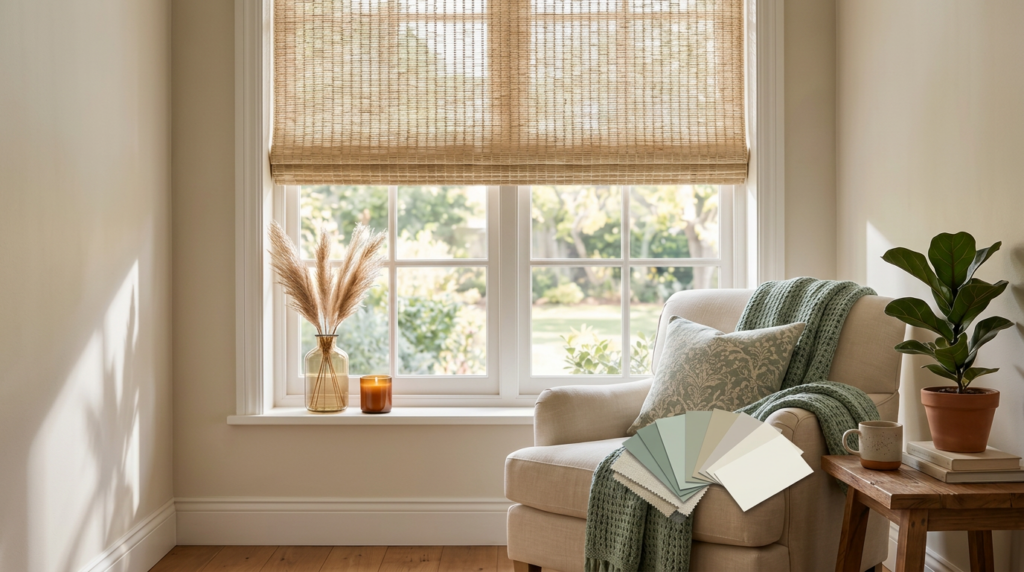
Different botanical fibres deliver contrasting mechanical strengths, opacity levels, and shading behaviors:
- Bamboo Slats: Rigid reeds cut into precise horizontal profiles provide structural uniformity that holds its shape cleanly across wide window spans. These dense slats produce pleasant dappled lighting while obstructing direct outdoor sightlines from the street. In sunlit sitting rooms with balanced moisture levels, we suggest bamboo when a home requires crisp geometric lines and dependable sun filtration.
- Jute Fibres: Spun into thicker, looped yarns, jute provides a coarse, rope-like grain that creates immediate visual warmth. This heavier density excels on tall heritage casings where substantial fabric weight balances deep oak trim and high plaster ceilings.
- Woven Grasses: Slender wild grasses intertwined with delicate reeds produce airy, variable weaves that gently mute exterior brightness while preserving ambient garden views.
For spaces requiring uniform light diffusion, collections like Provenance® Woven Wood Shades are handcrafted from natural woods, reeds, bamboo, and grasses, featuring sustainably harvested materials. Integrating premium window coverings woven from these authentic earth-derived fibers enables London homeowners to establish an organic interior aesthetic tailored to their specific sun exposure and architectural trim.
Natural Fiber Characteristics Across London Architectural Styles
London architecture ranges from century-old Victorian brick structures in Old East Village to mid-century bungalows and expansive custom builds in North London. Installing woven shades bridges these interior rooms with outside garden views while replacing synthetic fabric panels with renewable textures. Instead of bouncing raw glare across hardwood flooring, interlocking organic strands scatter direct sunbeams, softening incoming daylight and eliminating concentrated hotspots on antique furnishings.
Different plant weaves supply distinct light filtering and structural characteristics for domestic spaces:
- Bamboo Slats: Sturdy reeds provide rigid horizontal lines that retain structural shape across wide expanses. The tightly aligned construction diffuses exterior exposure into a soft, dappled wash while shielding family spaces from neighbourhood street view. In sunny gathering spaces, Custom Shades of London recommends bamboo when stable indoor humidity supports natural wood stability.
- Jute Fibers: Thick loops of spun jute yarn create a heavy, tactile surface. This substantial profile adds earthy depth and thermal warmth, balancing the scale of high-ceilinged parlours and traditional trim.
- Woven Grasses: Slender, wild plant strands interlace with fine reeds to yield varied opacities, allowing homeowners to soften outdoor light while keeping tree-lined exterior silhouettes visible.
For extensive living area glass, pairing woven materials with dedicated Provenance® Woven Wood Shades creates a finished architectural frame. Homeowners outfitting expansive porch-facing picture windows or wide patio openings can also coordinate these organic weaves with sliding glass doors to maintain cohesive plant-derived textures throughout the main floor.
Diffusing Western Afternoon Glare and Protecting Interior Finishes
When afternoon sun tracks westward across Southwestern Ontario, unshaded panes can quickly flood seating areas with intense heat and blinding glare. Installing woven shades creates an architectural barrier that breaks up intense incoming beams through interlocked, renewable plant fibers rather than solid synthetic films. Per the USDA Forest Service publication titled “Bamboo, reeds, and grasses as renewable resources,” these plant components supply sustainable structural integrity while scattering harsh afternoon exposure across interior spaces.
How Different Plant Weaves Scatter Western Light
Distinct organic strands react differently to low-angle western exposure, dictating how much illumination filters inside during late afternoon:
- Rigid Bamboo Reeds: Horizontal slats block direct glare lines completely, casting delicate striped patterns across wood flooring without darkening the entire interior.
- Braided Jute Strands: Coarser, looped jute yarns absorb incoming brightness, providing rich dimensional warmth for living spaces finished with dark wood trim or vintage millwork.
- Slender Wild Grasses: Fine reed blends soften bright outdoor light into an ambient, diffused glow, maintaining a view of the outdoors while tempering room glare.
For extensive glazing exposures such as multi-panel patio exits, mounting woven treatments on sliding glass doors provides continuous solar diffusion without sacrificing effortless access. Homeowners pairing tailored living room windows with a dedicated home office often choose lined weaves to prevent direct computer screen glare during peak sun hours.
We help property owners evaluate sunlight orientation to select the right weave density. In western-facing living areas that experience considerable midday warmth, we frequently suggest considering Provenance® Woven Wood Shades equipped with an independent backing liner. Handcrafted from natural woods, reeds, bamboo, and grasses, these Hunter Douglas assemblies feature sustainably harvested materials that filter glare during long summer sunsets while preserving delicate interior upholstery.
Natural Texture Profiles Across London Window Architecture
Integrating earth-toned botanical elements transforms indoor spaces by establishing a tactile link to surrounding tree-lined landscapes. Residential properties across historic enclaves like Old East Village, Wortley Village, and Old South showcase diverse window openings, ranging from tall Victorian double-hung frames framed by ornate millwork to broad mid-century picture glass and contemporary open layouts. Installing woven shades crafted from raw reeds, renewable grasses, or bamboo allows homeowners to temper incoming daylight cleanly without turning to synthetic sheet polymers. When midday sun strikes these natural weaves, the interlaced fibers intercept concentrated beams, scattering warm illumination across the room while eliminating harsh glare on finished hardwood surfaces.
Comparing Bamboo, Jute, and Woven Grass Textures
Distinct plant materials supply unique structural benefits, opacities, and interior shadow patterns depending on the yarn thickness and assembly method:
- Bamboo Slats: Stiff, cleanly milled reeds maintain rigid horizontal alignment across expansive glass panes. These tailored reeds project soft dappled light into open living areas while shielding street-level sightlines. In sunlit family spaces with stable indoor humidity, we often suggest bamboo profiles to establish balanced daylighting alongside precise visual screening.
- Jute Strands: Spun vegetable loops provide pronounced textural grain and deep earthy warmth. These substantial fibers bring physical weight and tactile richness, making them exceptionally suited for dressing tall living room casements or pairing with exposed timber beams.
- Woven Wild Grasses: Slender native grasses intertwined with fine reeds deliver varied open-weave patterns. These lighter constructions softly diffuse direct exposure without fully blocking backyard greenery or skyline views.
For extensive wall openings or multi-panel glass expanses, pairing handcrafted natural materials on large windows establishes continuous architectural cohesion from room to room. When considering premium engineered options, Provenance® Woven Wood Shades illustrate this craftsmanship by incorporating sustainably harvested bamboo, reeds, and natural woods into versatile Roman and vertical drapery profiles. Custom Shades of London measures each frame directly to ensure proper clearance, preventing fiber friction along older window casings while highlighting the organic variations unique to hand-assembled botanical treatments.
Selecting Organic Textures for Historic and Modern London Architecture
Woven shades bring tactile, plant-derived elements into residential interiors while preserving visual ties to exterior foliage. London properties present an eclectic mix of building styles, ranging from Victorian brick homes with ornate timber trim in Old South and Old East Village to mid-century bungalows and contemporary builds in North London. Incorporating untreated reeds, fibrous jute yarns, or rigid bamboo lets homeowners temper raw outdoor glare without turning to standard synthetic fabrics. Rather than allowing concentrated sun rays to create high-heat zones across hardwood floors and upholstery, these organic fibers scatter incoming daylight into a gentle glow.
Provenance® Woven Wood Shades illustrate how renewable plant resources translate into durable interior treatments. The USDA Forest Service identifies bamboo, reeds, and grasses as renewable resources, and Hunter Douglas crafts the Provenance® collection from natural woods, reeds, bamboo, and grasses using sustainably harvested materials. The way each material filters incoming light depends directly on the physical thickness and structure of the underlying harvest:
- Bamboo Slats: Stiff bamboo segments establish tidy, horizontal symmetry across window panes. These reeds break direct glare into dappled light across the room while blocking straightforward sightlines from sidewalks. In a sunlit living room with regulated humidity levels, Custom Shades of London recommends bamboo slats for spaces that need crisp daytime screening alongside natural warmth.
- Jute Fibers: Spun jute strands create chunky loops and an earthy, textured surface. These heavyweight fibers soften tall heritage windows and complement dark stain finishes on baseboards or flooring.
- Woven Grasses: Combining slender wild grasses with fine reed stalks produces open, airy patterns. These weaves maintain partial outward visibility while diffusing peak midday brightness.
FAQ
If you are considering bringing nature indoors with woven wood shades, you likely have questions about how these materials perform in everyday living spaces. The guide below addresses common considerations regarding durability, privacy, and costs to help you select the ideal natural fiber treatments for your home.
| Question | Answer |
|---|---|
| How well do natural fiber shades hold up against humid conditions in London, Ontario? | Woven grasses and reeds naturally tolerate everyday moisture, but unsealed natural fibers can absorb heavy humidity over time. If you install woven wood shades in high-moisture spaces like bathrooms or basements in London, Ontario, choose products with protective backings or moisture-resistant finishes to prevent warping. |
| Can woven wood shades provide full privacy at night? | Loose natural weaves filter sunlight during the day while allowing outward views, but they reveal indoor silhouettes when interior lights turn on at night. Adding an attached privacy liner or a blackout fabric backing solves this issue without hiding the organic textures from your room. |
| Which natural fiber material works best for south-facing living areas? | Densely woven bamboo and flat reeds perform best in rooms with intense sunlight because they block harsh glare while diffusing heat. Lighter grasses and loose jute offer softer filtration, which suits north-facing spaces or areas where maximum daylight is preferred. |
| What is the typical cost for custom woven window treatments in London, Ontario? | Custom natural fiber shades generally range from $250 to $650 per single window depending on material selection, weave density, and lining options. In London, Ontario, adding motorized controls or specialty edge banding will place orders toward the higher end of that price spectrum. |