
There’s something special about the natural texture of woven wood shades. Crafted from materials like bamboo, grasses, reeds, and wood, these window treatments bring warmth and character to a room while allowing beautiful natural light to filter through. But when choosing woven shades for your home, there’s an important decision to make: Should you choose lined or unlined woven wood shades?
The answer depends on how much natural light you want, the privacy your room needs, and how you use the space throughout the day. Let’s explore the differences so you can find the right balance of style and function.
What Are Unlined Woven Wood Shades?
Unlined woven wood shades showcase the natural beauty of their materials. Without a backing liner, sunlight passes through the woven fibers, creating a soft, textured effect that changes throughout the day. The amount of light that enters depends on the materials and how tightly they’re woven. More open weaves allow greater light transmission, while tighter patterns can provide additional coverage.
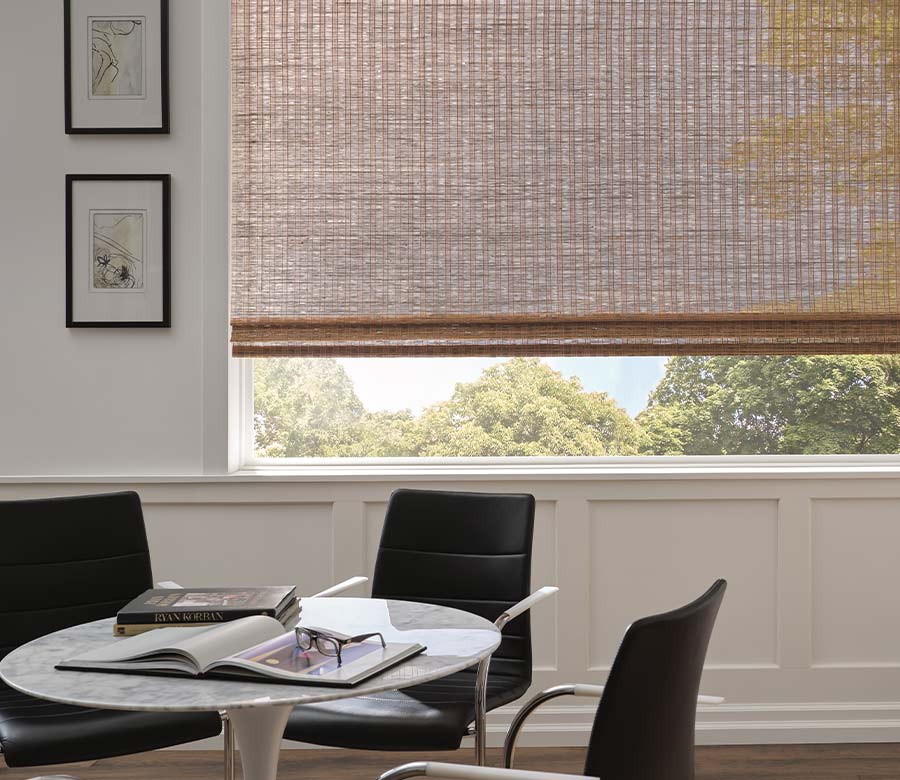
Why choose unlined woven wood shades?
- Highlight the natural texture and character of the weave
- Welcome softly filtered daylight into your home
- Create an airy, relaxed atmosphere
- Add warmth and dimension without heavy-looking window coverings
Unlined shades are especially appealing in living rooms, dining rooms, and other spaces where natural light is a priority. However, it’s important to consider privacy. Depending on the weave, people may be able to see through the shade, particularly when interior lights are on after dark.
What Are Lined Woven Wood Shades?
Lined woven wood shades combine the decorative appearance of natural materials with an additional layer of fabric behind the weave. This liner changes how much light passes through the shade and can provide greater privacy. Liners are particularly helpful when you love the appearance of woven wood but need more control over sunlight or visibility.
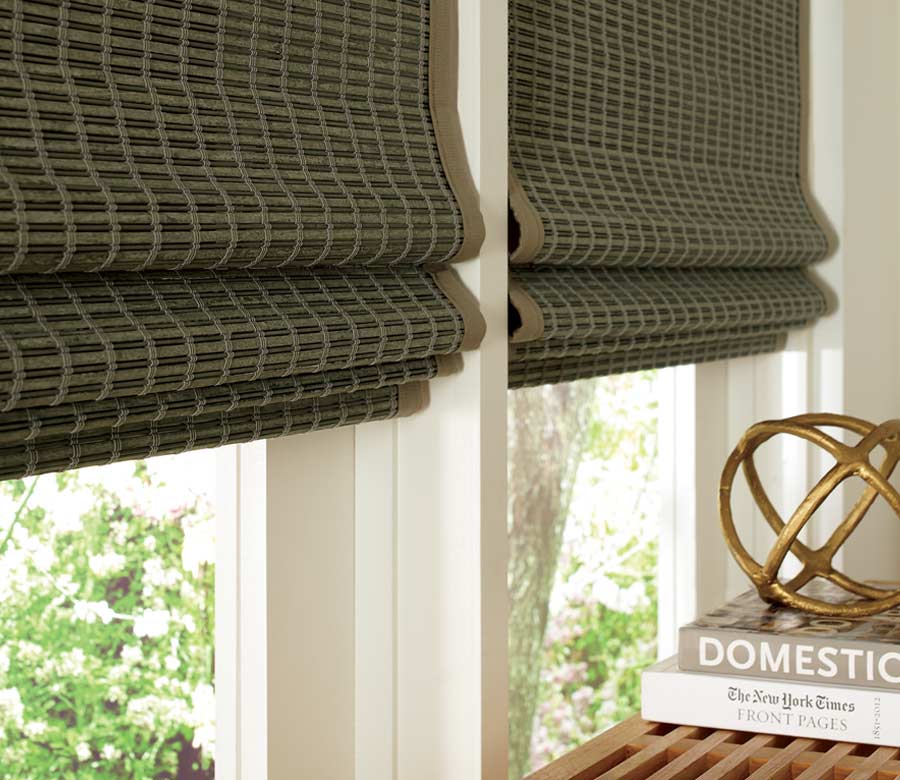
Light-Filtering Liners
A light-filtering liner allows daylight to enter while reducing visibility through the woven material. This creates a softer, more diffused lighting effect and provides greater privacy than many unlined weaves. Light-filtering liners work well in living areas, kitchens, and home offices where you want natural brightness without as much direct light or visibility through the shade.
Room-Darkening Liners
For bedrooms, nurseries, and media rooms, a room-darkening liner offers greater control over incoming sunlight. These liners use more opaque materials to reduce light transmission through the shade.
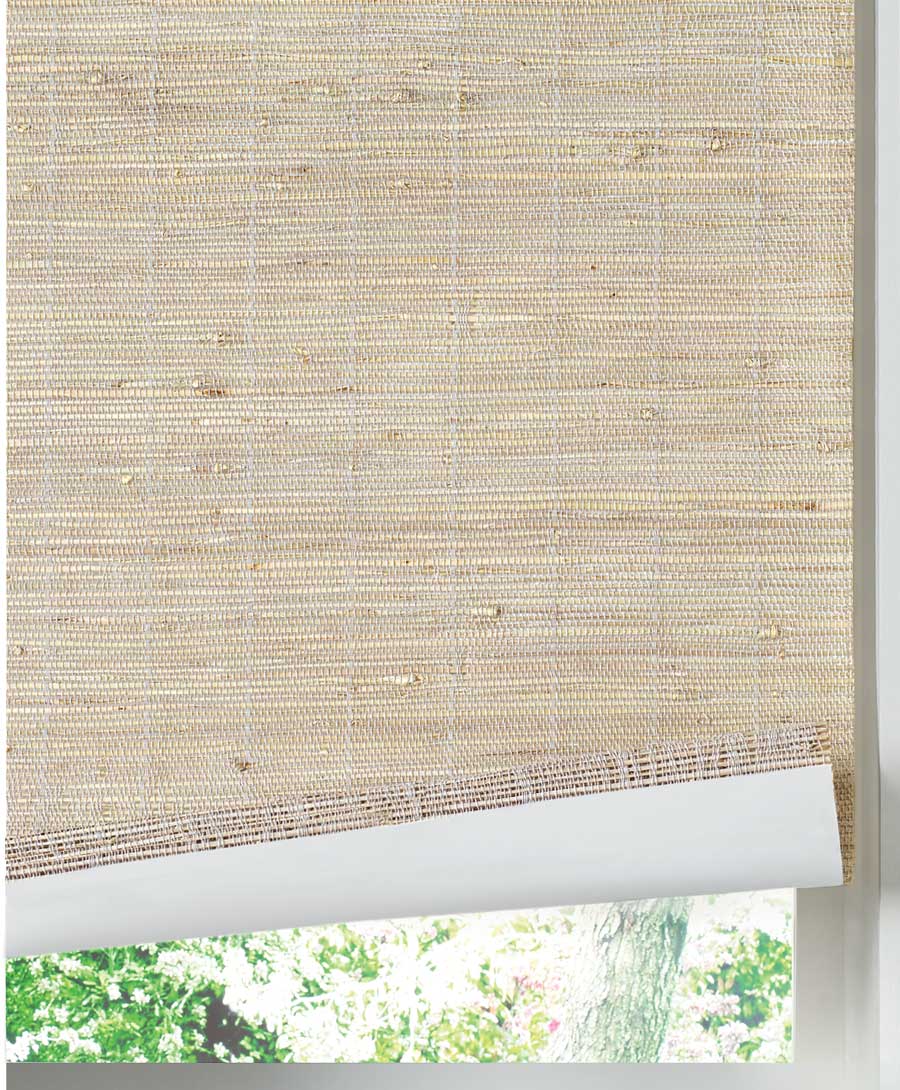
While room-darkening liners can create a significantly darker environment, some light may still enter around the edges of the window treatment. If limiting outside light is a priority, explore our room-darkening window treatments for additional options.
Lined vs. Unlined Woven Wood Shades: What’s the Difference?
Both styles offer the organic appearance that makes woven wood shades so appealing. The biggest differences involve light control, privacy, and how the shade performs throughout the day. The right choice often comes down to the room itself. A dining room may benefit from the airy appearance of an unlined weave, while a bedroom may need a liner to reduce early morning sunlight.
Can You Have Natural Woven Shades and Better Insulation?
Yes! If you love the appearance of woven wood shades but want additional insulation and flexible light control, there’s another option worth exploring. Hunter Douglas Provenance® Woven Wood Shades can be paired with a secondary cellular shade on the same headrail. The woven shade and cellular shade operate independently, allowing you to adjust each layer based on your needs.
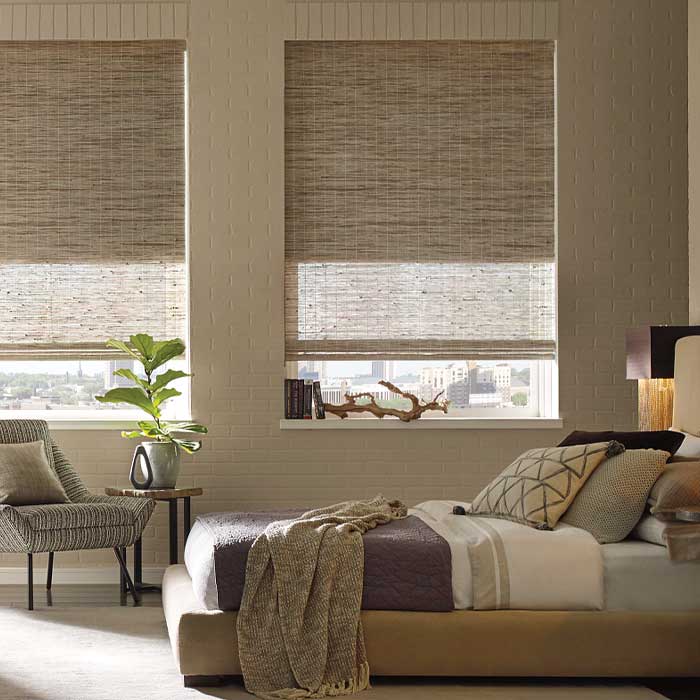
During the day, you can enjoy natural light through the woven material. When greater privacy, room darkening, or insulation is needed, the secondary cellular shade provides another layer of coverage. This combination can be especially useful in Ontario homes, where changing seasons make comfort at the window an important consideration. Explore our energy-efficient window coverings to discover additional ways to improve year-round comfort.
Which Woven Wood Shades Are Best for Each Room?
Living Rooms & Dining Rooms
Unlined woven wood shades are a beautiful choice for rooms where natural light and organic texture take priority. If your windows face neighboring homes or busy streets, a light-filtering liner can provide additional privacy without sacrificing the overall design.
Bedrooms
Room-darkening liners are often the better choice for bedrooms. They help reduce unwanted light while maintaining the warm, natural appearance of woven wood shades. For additional flexibility, consider a dual-shade configuration.
Kitchens & Home Offices
Light-filtering liners can help manage glare and improve privacy while keeping these everyday spaces bright and welcoming. Consider the direction your windows face and how sunlight moves through the room during working or cooking hours.
Street-Facing Windows
Privacy becomes especially important when windows face sidewalks, neighboring homes, or outdoor gathering areas. A liner can reduce visibility through the woven material, particularly after sunset when indoor lighting makes unlined shades easier to see through.
Finding the Right Balance of Light, Privacy & Style
Choosing between lined and unlined woven wood shades doesn’t have to mean compromising on design. Both options celebrate the beauty of natural materials, while different liner configurations allow you to customize the way your window coverings function. At Custom Shades, our team can help you explore weave patterns, fabric opacities, and operating options to find the right combination for your home. Visit our showrooms in London or Exeter, or schedule a consultation to explore the natural beauty and versatility of Provenance® Woven Wood Shades.