
Motorized window shades make it easier to control natural light, privacy and comfort throughout your home. With the touch of a button—or even an automated schedule—you can adjust shades across the room, on tall windows or throughout your home without reaching for a cord or manually raising and lowering each shade. But before choosing motorized window treatments, there’s another important question to consider: How will your shades be powered?
Depending on the window treatment and application, motorized shades may use battery power, a rechargeable battery system or hardwired power. For compatible rechargeable systems, a solar charger can also help keep the battery charged using sunlight at the window. Understanding these options can help you choose a power setup that fits your windows, your home and the way you plan to use your shades.
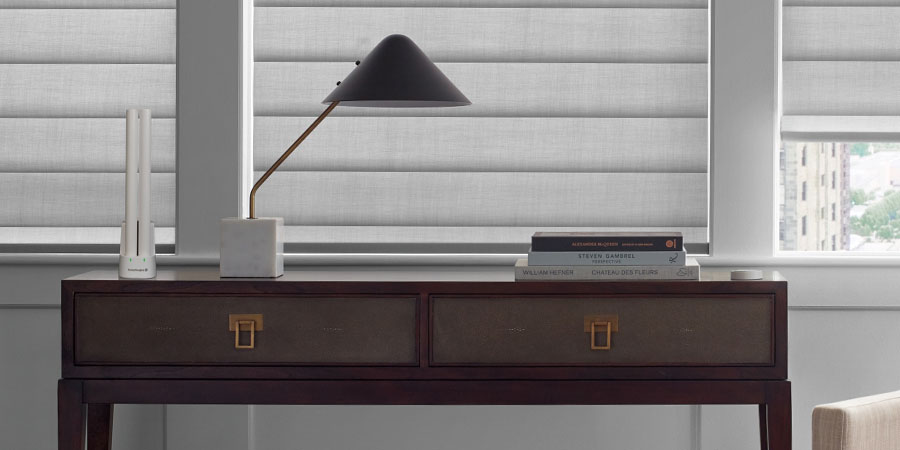
How Are Motorized Window Shades Powered?
There isn’t one power source that’s right for every motorized shade. The best option depends on factors such as the size and location of your windows, the window treatment you select, how frequently the shades will operate and whether electrical wiring is available near the windows.
Hunter Douglas PowerView® Automation offers power options designed to make automated window treatments practical for both existing homes and new construction. During your consultation, we can help determine which available power option makes the most sense for your particular windows and window treatments.
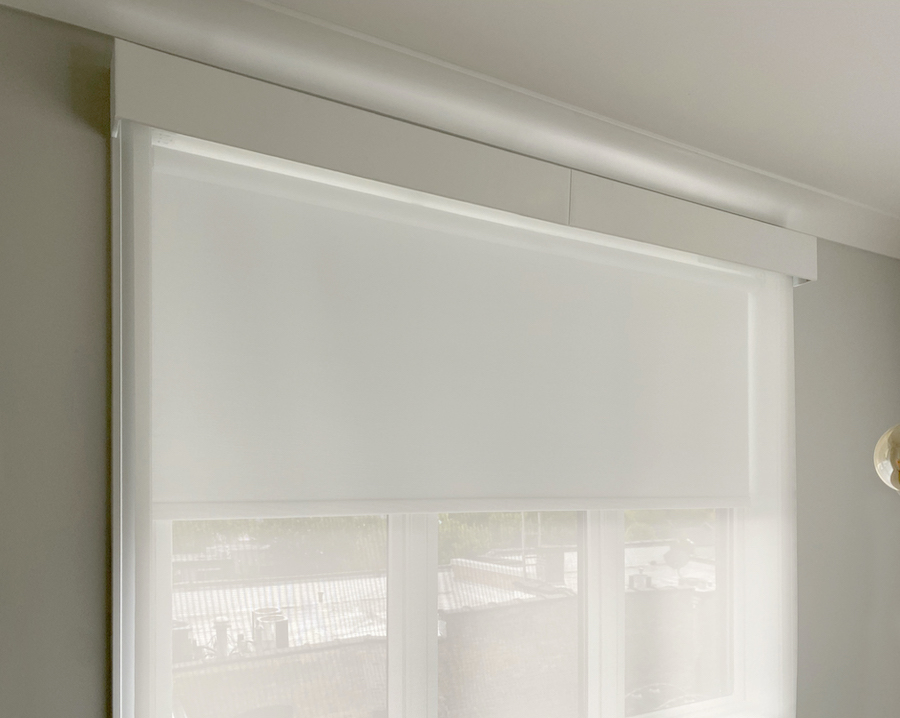
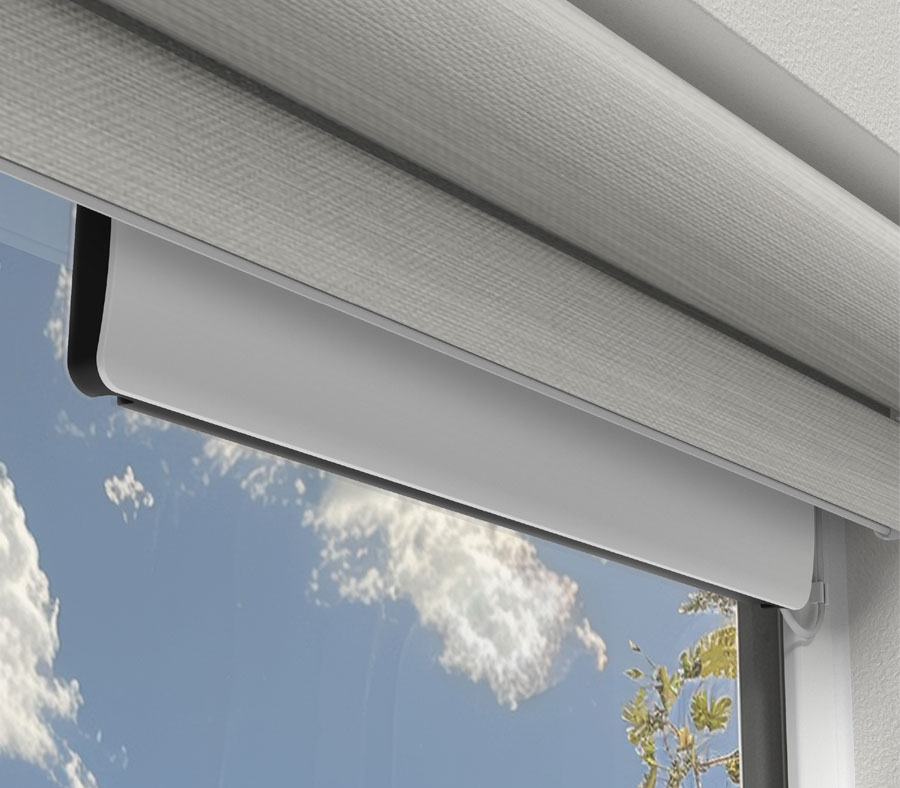
Designer Roller Shades with PowerView® Automation, powered by the Rechargeable Battery Wand
Rechargeable Battery Power for Motorized Shades
Rechargeable battery power is an appealing option for homeowners who want the convenience of motorized shades without running electrical wiring to each window. A rechargeable battery system provides power to the motor while keeping the installation streamlined.
Instead of continually replacing disposable batteries, the rechargeable battery can be charged when needed and then returned to regular use. This makes rechargeable power especially convenient when you’re adding automation to an existing home where hardwiring may not be practical.
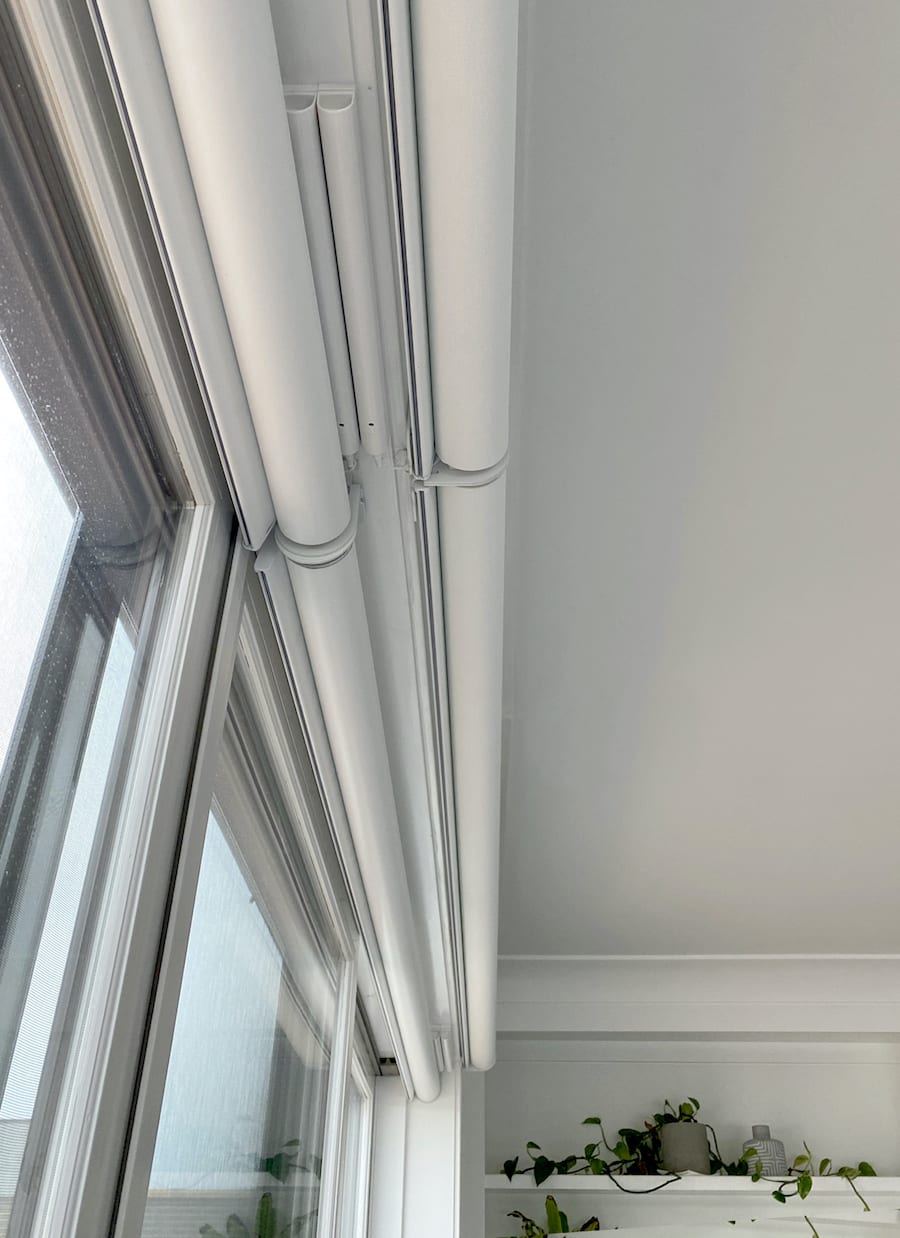
The Rechargeable Battery Wand is installed inside the headrail.
Rechargeable power may be a good option when you want to:
- Add motorized shades without opening walls for new electrical wiring
- Reduce the need for disposable battery replacement
- Maintain a clean, streamlined appearance at the window
- Motorize windows in finished rooms or existing homes
- Enjoy automated light and privacy control without a nearby electrical outlet
How Do You Charge Rechargeable Motorized Shades?
When the rechargeable battery needs power, it can be connected to the appropriate charger. How often charging is required depends on the window treatment, shade size, battery system and how frequently the shade is operated.
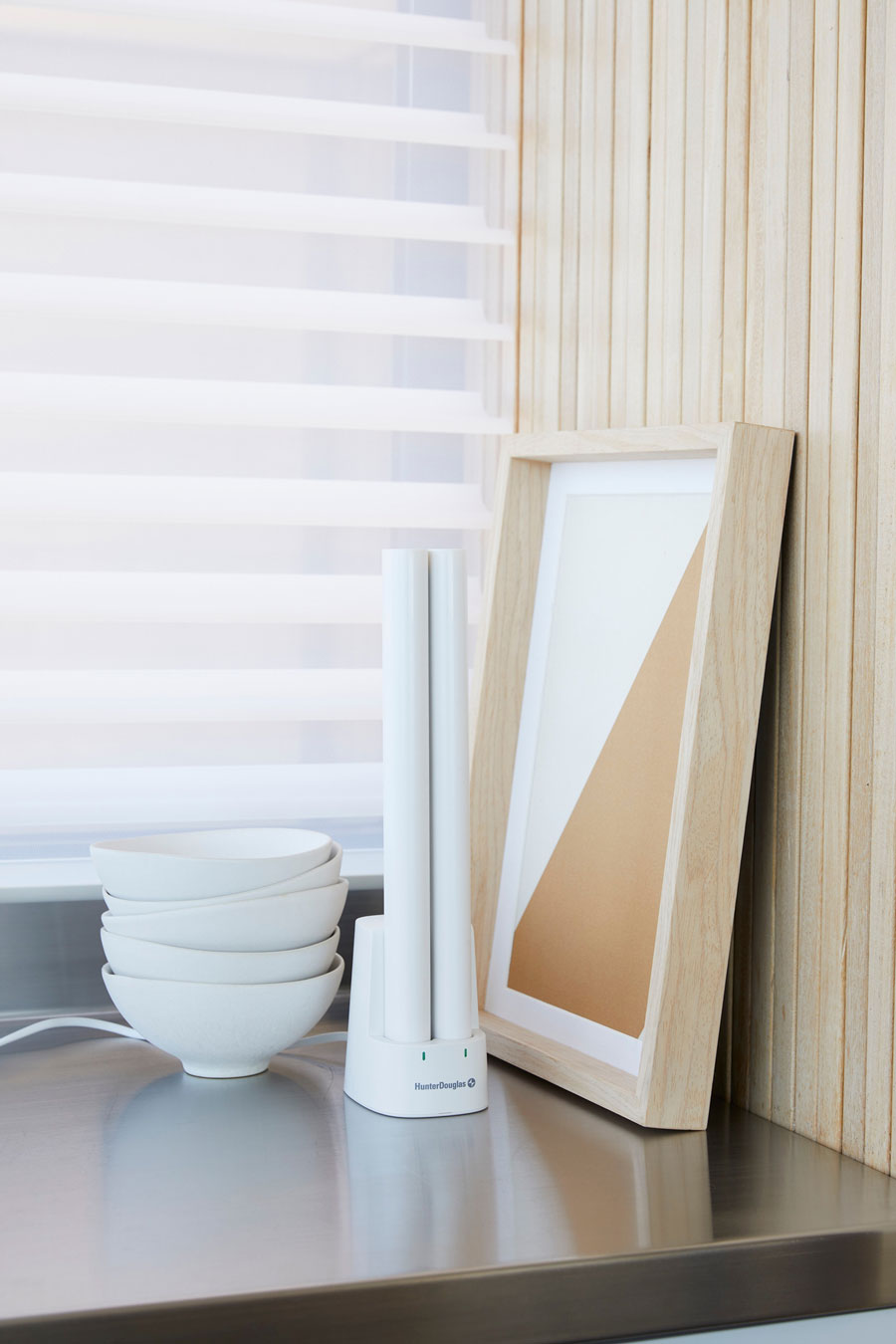
A shade that moves several times every day may use power differently than a shade that’s adjusted only occasionally. Rather than focusing on a single charging schedule for every window, it’s helpful to choose a power system based on how you expect to use your motorized window treatments.
If you’re still deciding how automation will fit into your daily routine, our guide to window shade automation explores additional considerations when planning motorized shades for your home.
Can Solar Power Help Charge Motorized Shades?
For compatible motorized window treatments, solar charging can provide another convenient way to support rechargeable battery power. A solar charging accessory is positioned at the window where it can collect available sunlight and help maintain the rechargeable battery.
This can be particularly useful for windows that receive adequate sunlight and would otherwise be inconvenient to access for charging. Rather than relying entirely on manually connecting a charger when the battery runs low, solar charging can help keep the rechargeable system powered using the sunlight already reaching your windows.
Where Is the Solar Charger Installed?
The solar charging unit is installed at the window and positioned to receive sufficient sunlight. Because every window receives light differently, placement matters. Window direction, surrounding trees, rooflines, neighbouring buildings and other sources of shade can all affect the amount of sunlight reaching the charger.
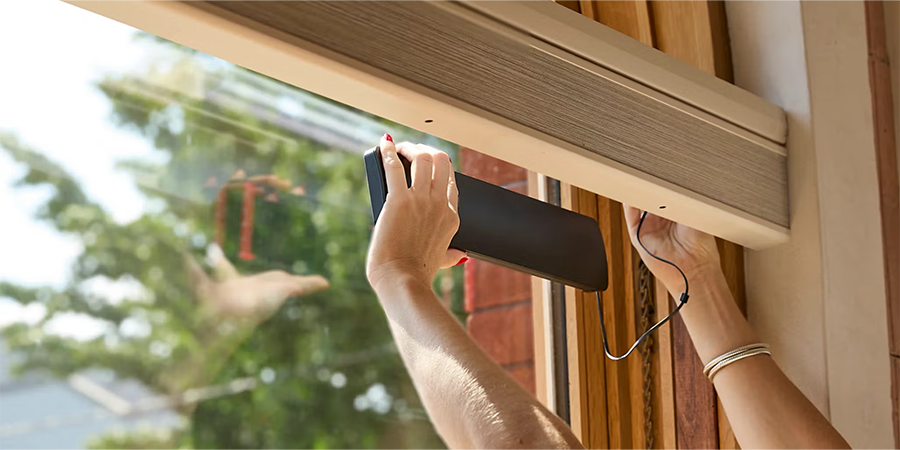
Not every window will be an ideal candidate for solar charging, which is why it’s helpful to consider the power source at the same time you select your motorized window treatments.
Which Windows Are Good Candidates for Solar Charging?
Solar charging can be especially useful for windows that receive consistent sunlight and are difficult to reach. Tall windows, windows positioned above furniture and other less accessible locations are often excellent candidates for automation in the first place, and reducing the need to access the battery can make motorization even more convenient.
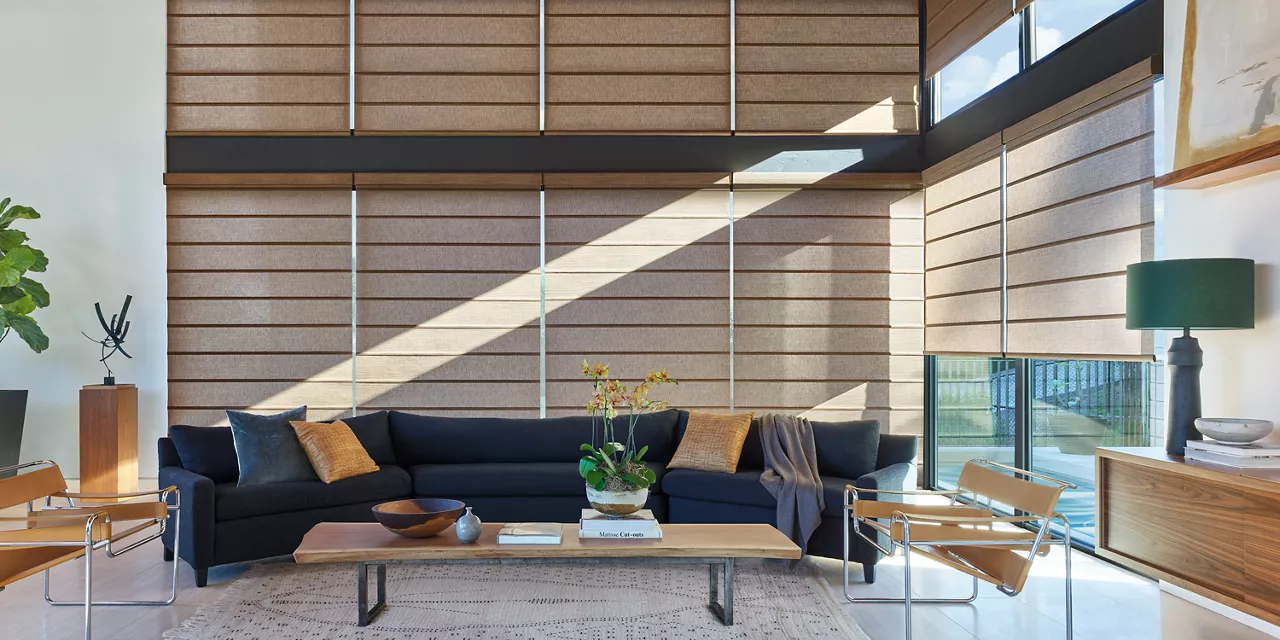
For very tall or expansive windows, you can also explore our recommendations for window treatments for large windows.
Rechargeable Battery vs. Hardwired Motorized Shades
Rechargeable battery power can be an excellent choice for existing homes because it generally doesn’t require electrical wiring at every window. It offers flexibility and can make it easier to add automation to finished spaces.
Hardwired power can be a good option when electrical access is already available or when motorized window treatments are being planned during construction or a major renovation. If you’re building or renovating, it’s worth discussing motorized window treatments early so wiring can potentially be incorporated before walls and finishes are completed. This can be especially valuable when planning automation for multiple rooms, large expanses of glass or difficult-to-reach windows.
The right choice doesn’t necessarily come down to which system is “better.” It’s about which power source works best for your windows, window treatments and electrical setup.
What Happens to Motorized Shades During a Power Outage?
The answer depends on how your shades are powered. Battery-powered and rechargeable motorized shades have their own power source, so a household electrical outage doesn’t necessarily remove power from the shade itself. Hardwired systems rely on the home’s electrical power unless another backup power source is present.
Some smart-home and app-based features may also depend on your home’s internet, Wi-Fi or other connected equipment. Your window treatment specialist can explain how the particular control and power options you’re considering will function in different situations.
What Power Source Is Best for Hard-to-Reach Windows?
Automation is particularly valuable on windows that are difficult to operate manually. Tall windows, windows above staircases, large expanses of glass and windows positioned behind furniture can all become much easier to manage when the shades can be controlled remotely.
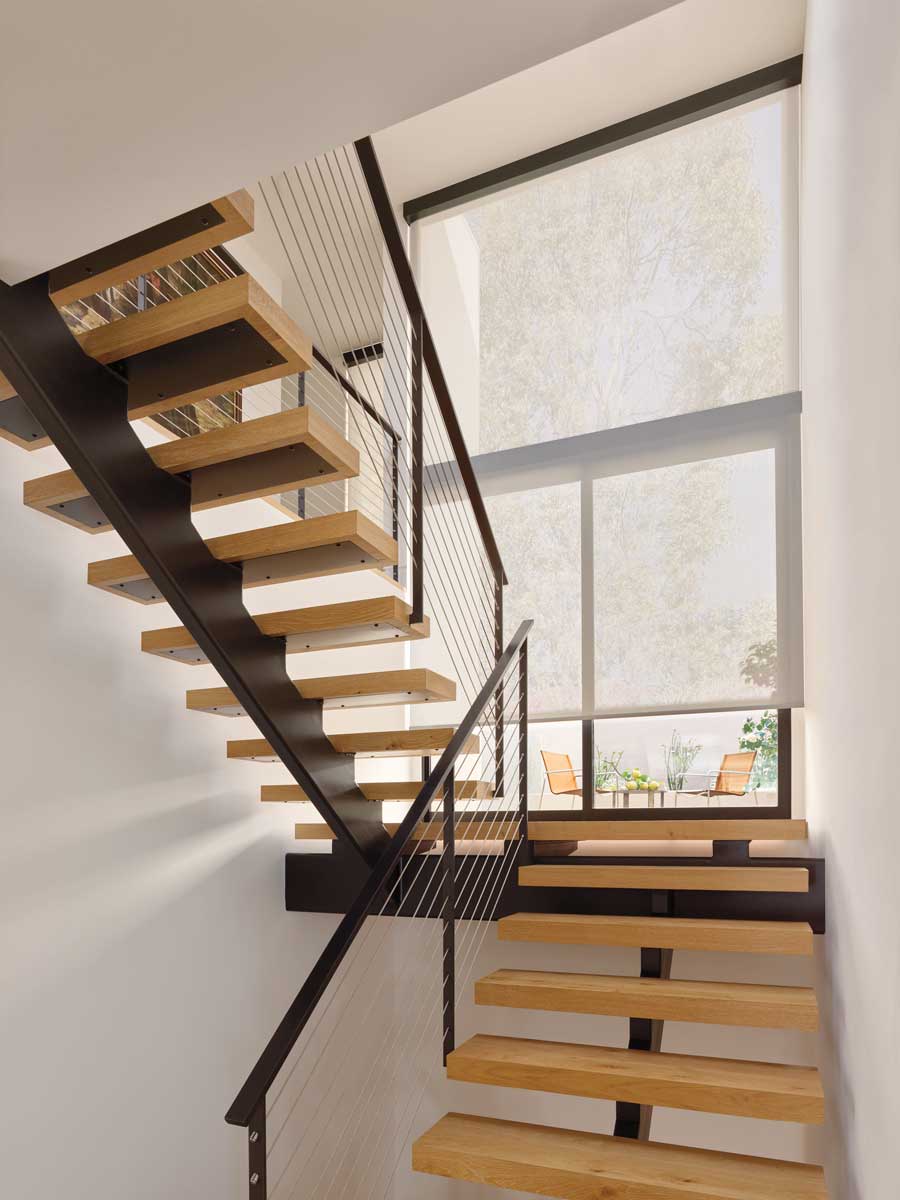
Designer Solar Shades
For these applications, consider not only how you’ll operate the shade, but how easily its power source can be accessed. A rechargeable system with compatible solar charging may reduce the need to reach the shade for charging, while hardwired power can eliminate routine battery access altogether. Your window treatment specialist can help determine which available option makes the most sense for the location.
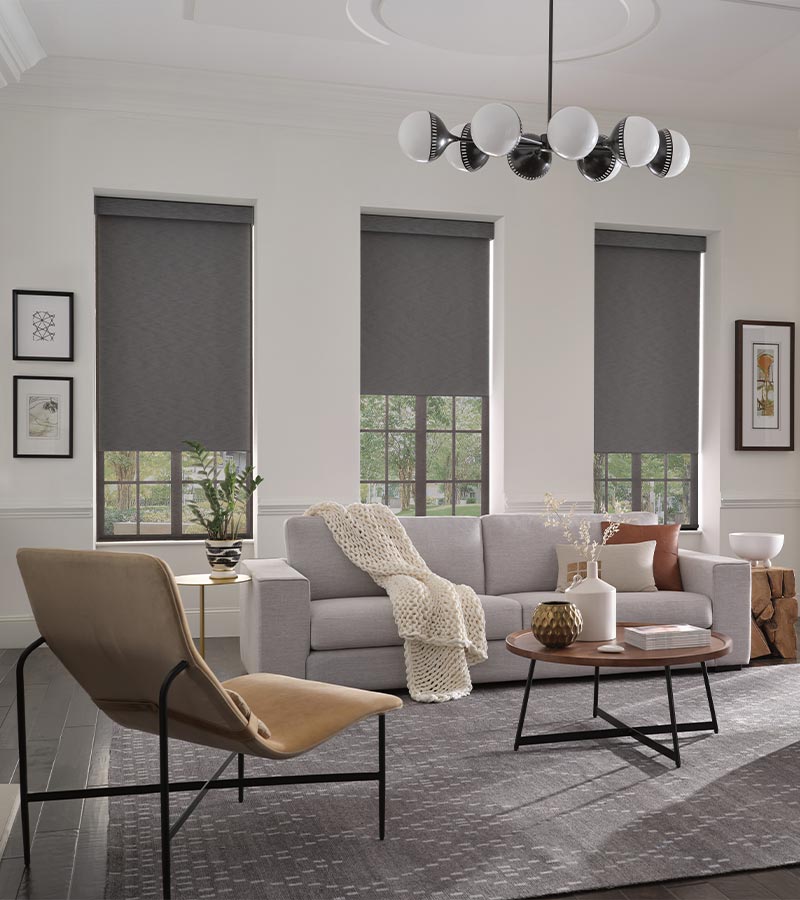
Power is only one part of planning an automated window treatment system. You’ll also want to consider which shades you want to motorize, how you’d like to control them and whether you want individual control, scheduled operation or smart-home integration. Explore our guide to choosing window shade automation for help with those decisions. Motorized roller shades are one option for streamlined automated light control, including large windows and dual-shade configurations that provide multiple levels of privacy and light control.
Make Motorized Shades Work for Your Home
The right power source can make motorized shades easier to incorporate into both existing homes and new projects. At Custom Shades of London, we’ll consider your windows, shade selection, accessibility and everyday needs to help determine which available power option makes the most sense for your home. Explore our automated window covering solutions or schedule a consultation to discover how PowerView® Automation can bring effortless light and privacy control to your Ontario home.